Cold Chain Logistics — Ensuring Safe Transport for Temperature-Sensitive Goods
Cold chain logistics uses temperature-controlled vehicles and storage to keep sensitive products safe from the moment they leave a manufacturer until they reach their destination. Demand for this kind of protection is accelerating fast.
The global pharmaceutical cold chain packaging market reached a $17.9 billion value in 2024, and industry experts predict it will reach $63.3 billion by 2033. The rising need for biologics, vaccines and specialty drugs that can’t tolerate temperature swings has fueled this growth. As shipments of these products increase, so do the regulatory requirements shippers must meet to move them safely.
What Safe Transport Demands
Few temperature-sensitive categories face scrutiny as stringent as pharmaceutical cold chain logistics. Unlike spoiled food, a compromised biologic or vaccine can look intact on arrival, even if it is ineffective or unsafe for patients. That invisible failure explains why compliance requirements in this category are so exacting.
Most recommended vaccines, biologics and insulin require a consistent range of 35°F to minus 46°F during transport. Varicella and live attenuated influenza vaccines fall into a colder category, needing storage below 5°F. The bar rises even higher for mRNA therapies like the Pfizer-BioNTech COVID-19 vaccine, which requires ultra-cold chain infrastructure with transport temperatures between minus 112°F and minus 76°F. Even a brief deviation from the specified range can compromise a product before anyone notices.
Good Distribution Practice certification requires a provider to maintain documented chain-of-custody records, validated transport lanes and qualified packaging systems. They also suggest formal procedures for investigating excursions outside those ranges. The pharmaceutical cold chain is a compliance discipline, and few logistics partners have the certifications to meet its demands.
Regulatory Standards Governing Pharmaceutical Shipping
Three regulatory frameworks define the compliance floor for pharmaceutical cold chain shipping.
- Good Distribution Practice: GDP certification requires qualified transport lanes, recorded handoffs, calibrated equipment and a formal deviation-handling process for any temperature excursion. A GDP-certified partner operates under an audited quality system built for this specific purpose.
- FDA 21 CFR Part 211: Part of the FDA’s current Good Manufacturing Practice requirements, this regulation mandates storing and transporting drug products that need refrigeration at controlled temperatures using validated monitoring equipment, with full documentation at every step.
- WHO TRS 961 Annex 9: This international standard governs time- and temperature-sensitive pharmaceutical products, covering contingency planning, excursion records and minimum standards for transport equipment.
When vetting a prospective partner, ask how they handle each standard. Qualified equipment, trained personnel, documented transfers and contingency plans for delays all signal genuine readiness and risk reduction.
Conditions for Frozen and Specialty Cargo
Food cold chain logistics fall under a separate regulatory framework from pharmaceuticals. Its failure mode differs, too. Where pharmaceutical compromise happens silently, a food shipment that loses temperature control risks pathogen growth, quality degradation and a direct threat to consumer safety that can trigger costly recalls.
Frozen and specialty food shipments demand precise temperatures held steady through loading, transit and delivery. They also need packaging that remains sealed against the physical stress of a long haul. The highest risk to temperature integrity typically appears at transition points where cargo sits outside active climate control, including loading docks, intermodal handoffs and customs delays. A few unmonitored hours at any of these junctures can spoil an otherwise flawless transit.
This scope covers frozen goods and specialty packaged foods, such as premium snacks and gourmet ingredients, but not bulk fresh commodities, which follow a separate set of food logistics standards.
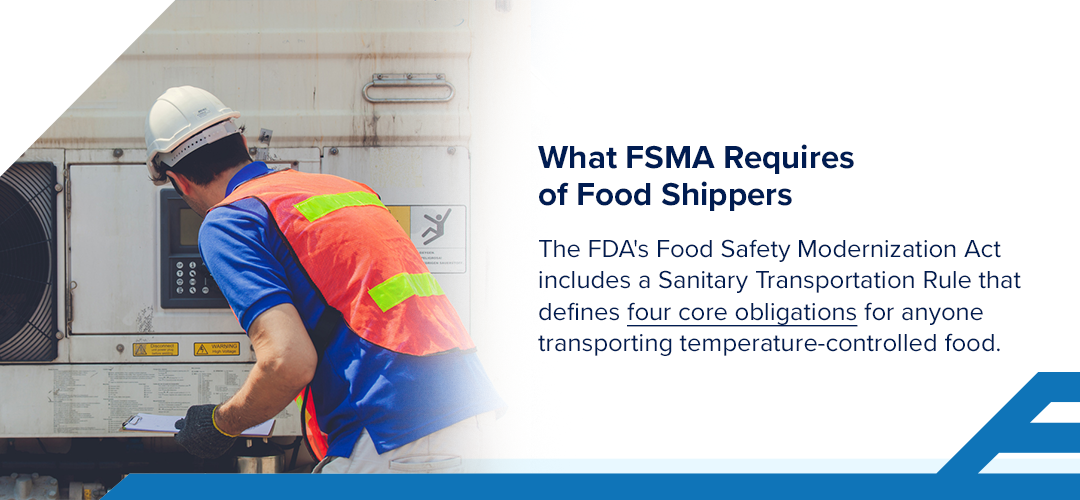
What FSMA Requires of Food Shippers
The FDA’s Food Safety Modernization Act includes a Sanitary Transportation Rule that defines four core obligations for anyone transporting temperature-controlled food.
- Shippers develop written procedures: Shippers must create and implement written procedures to ensure food travels under adequate temperature control from the moment it leaves the dock.
- Carriers precool their equipment: Carriers should precool mechanically refrigerated compartments to the shipper’s specified temperature before loading any product.
- Loaders verify temperature conditions: Loaders must confirm temperature conditions before loading any food that requires temperature control for safety.
- Carriers demonstrate compliance: Carriers should be able to prove, upon request, that they maintained the appropriate temperature conditions throughout the entire transit.
The Cold Chain Failure Points Every Shipper Should Know
Meeting regulatory standards covers half the equation. The other half involves recognizing the specific moments when a compliant shipment can still go wrong. Shippers who ask a prospective partner how they handle each scenario gain awareness of that company’s readiness long before midtransit problems ever surface.
- Loading dock and handoff exposure: Excursions most often occur during the transition from a climate-controlled warehouse to a transport vehicle, especially when precooling protocols lapse or dock-to-vehicle transfer times stretch too long.
- Multimodal transport transitions: Shipments moving by air, ocean and ground rarely travel seamlessly. Each mode switch introduces a gap in which temperature continuity and documentation must transfer together, sometimes leaving responsibility uncertain.
- Customs holds and international border delays: Regulatory paperwork can delay cargo regardless of how time-sensitive the shipment is. International pharmaceutical shipments undergo inspections that can unpredictably extend dwell time, exposing products to conditions outside their required range.
- Last-mile delivery: The least well-controlled environment of the entire journey is often on the final leg. A destination lacking dedicated cold-receiving facilities leaves frozen goods and pharmaceutical cargo exposed just before delivery.
Cold Chain Transport Requires Expertise
Shippers in the pharmaceutical or food space evaluating a cold chain logistics partner should look for a specific set of credentials. Together, these five capabilities separate a general freight provider from a true cold-chain specialist, giving shippers a partner equipped to handle the technical and regulatory sides of the shipment.
- GDP certification: A verifiable credential confirming a provider operates under documented, qualified distribution practices rather than informal or ad hoc temperature handling.
- Regulatory fluency across pharma and food standards: A partner who understands GDP, FSMA and FDA requirements actively shields shippers from regulatory risk, drawing on established trade compliance expertise built through years of clearing shipments across international borders.
- Customized, multimodal solutions: Cold-chain cargo calls for a tailored approach. Experienced partners can route pharmaceutical shipments by air for speed while relying on ocean-based refrigerated transport for frozen specialty food, matching each shipment’s risk profile to the appropriate strategy.
- Real-time shipment visibility: Continuous, trackable insight into shipment status and temperature conditions throughout transit gives shippers confidence, especially across multi-leg international routes.
- A global network with local expertise: Managing customs, regulatory handoffs and cross-border coordination requires reach paired with on-the-ground knowledge in every region a shipment passes through.
Partner With EMO Trans for Safe, Compliant Cold Chain Logistics
Moving temperature-sensitive shipments takes a partner who understands the regulations, holds certifications and offers the infrastructure to keep your cargo safe from origin to delivery. EMO Trans brings over 60 years of experience managing the compliance details that matter, backed by a seasoned, connected team ready to handle the specifics of your shipment.
Explore our cold chain logistics solutions to see how we tailor transport strategies to your product’s exact requirements or request a quote today to start the conversation with our team.